Storm Water
Storm Water
Stormwater Management – MS4 Program
Homeowners Guide to Stormwater
The Problem
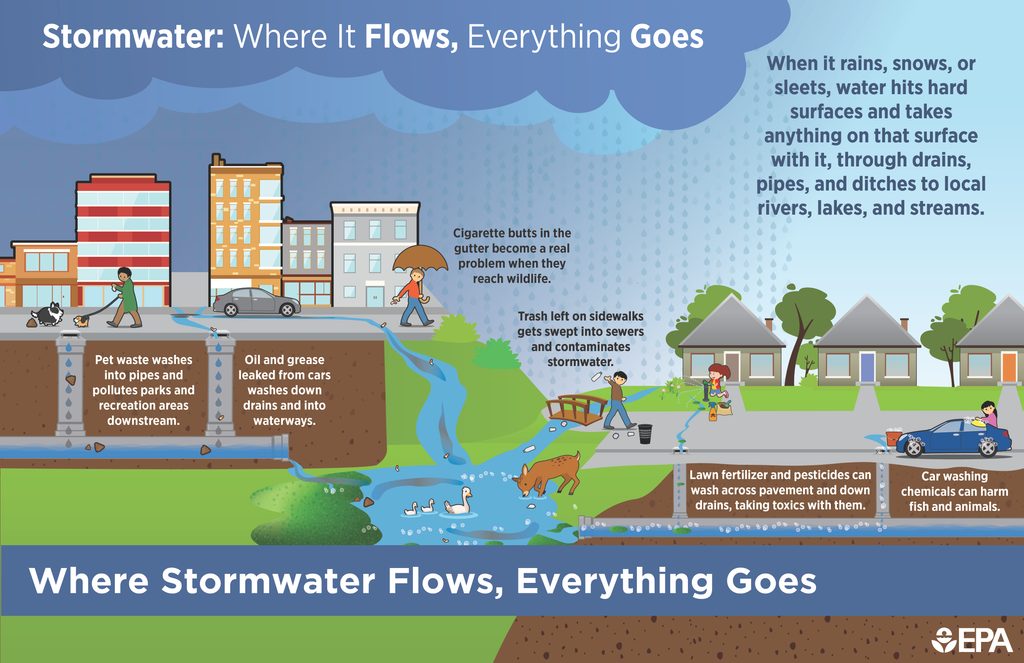
Out of sight, out of mind? Most people don’t think of stormwater unless it invades their basement or floods a road. But how we handle stormwater determines whether it will be a hazard or a precious resource.Stormwater runoff occurs when water from rain or snow and ice melting flows over the ground. This water can become a problem when it picks up debris, chemicals, dirt and other pollutants as it flows or when it causes flooding and erosion of streambanks.
Stormwater travels overland, into swales and through a system of inlet, pipes and basins that make up storm sewer systems. It eventually flows directly to a stream or wetland. Unless we treat this water, all of the pollutants it carries will empty into our surface waters.
What You Can Do
Here are some of the most important ways for Township residents to prevent stormwater pollution:
- Properly dispose of hazardous substances, such as used motor oil, cleaning supplies and paint – never pour them down any part of the storm sewer system, and report anyone who does.
- Use pesticides, fertilizers and herbicides properly and efficiently to prevent excess runoff of these items.
- Look for signs of soil and other pollutants, such as debris and chemicals, leaving construction sites in stormwater runoff or tracked into roads by construction vehicles. Report poorly managed construction sites that could impact stormwater runoff to the Township.
- Install innovative stormwater practices on residential properties, such as rain barrels or rain gardens, that capture stormwater and keep it on-site instead of letting it drain away into the storm sewer system.
- Report any discharge from stormwater outfalls during times of dry weather – there could be a problem.
- Pick up after pets and dispose of their waste properly. No matter where pets make a mess – in a backyard or on open space – stormwater runoff can carry pet waste from the land to the storm sewer system to a stream.
- Store materials that could pollute water indoors and use containers for outdoor storage that do not rust or leak to eliminate exposure of materials to stormwater.
- If you witness an illicit discharge or see runoff from construction sites, you may call the Township office at 215-536-2090 or the Pennsylvania Department of Conservation Southeast Region Office at 484-250-5900 (24 hours/day).
Agency Links
- Pennsylvania DEP Stormwater Management Program
The Bureau of Point and Non-Point Source Management’s homepage. - Environmental Protection Agency – Stormwater Program
Technical and regulatory information about the National Pollutant Discharge Elimination System (NPDES) stormwater program. - Bucks County Conservation District
The Bucks County Conservation District’s homepage. - Bucks County’s Innovative Stormwater Management Best Management Practices
Outlines examples and best practices for stormwater management. - PA Department of Environmental Protection
General programs serving the counties of Bucks, Chester, Delaware, Montgomery, and Philadelphia. - PA Department of Environmental Protection
General contacts for Pennsylvania’s DEP. - Watershed Resources
Resources to stormwater management maintained by the Center for Watershed Protection. - U.S. EPA – Watersheds
Links to watershed resources including the “Watershed Academy” (free training modules), certification, learning modules, webinars, watershed resources and upcoming events. - U.S. Environmental Protection Agency – Polluted Run-Off
Resources addressing “non-point source pollution” ranging from kid’s education to regulations and training. - International Stormwater Best Management Practices (BMP) Database
Scientifically sound information to improve the design, selection and performance of BMPs. - Low Impact Development: Urban Areas
Resources and publications that can be used to meet regulatory and receiving water protection program goals for urban retrofits, re-development projects, and new development sites. - For more in-depth Stormwater BMPs, see the Pennsylvania Stormwater Best Management Practices Manual .
Riparian Buffers
A riparian buffer is an area around a stream populated with vegetation such as trees and shrubbery, which helps to increase water quality and reduce pollution.
These buffers are an important part of the Unami Water Basin, of which a large part of the waterways run through Milford Township. These buffers accept water run-off from impervious surfaces (driveways, roadways, houses), pesticides from local agriculture, sediment from nearby populated areas, and other pollutants that can interfere with the waterway. The vegetation in the buffer creates a biological filter to help remove nitrates from water run-off. Trees also provide shade for the stream in order to reduce the temperature of the waterway and prevent thermal “pollution” which can kill the fish.
Milford Township strives to maintain and, in some cases, build these buffers in order to keep the local waterways clean and free from contamination.